California moves to exempt Linux from its age-verification law after backlash
Mirrored from Hacker News — AI on Front Page for archival readability. Support the source by reading on the original site.
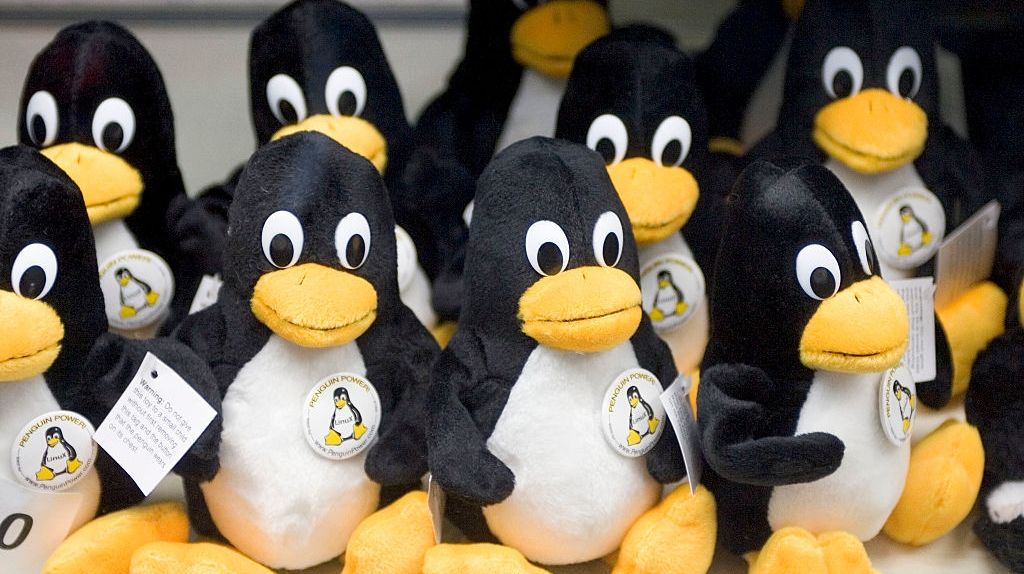
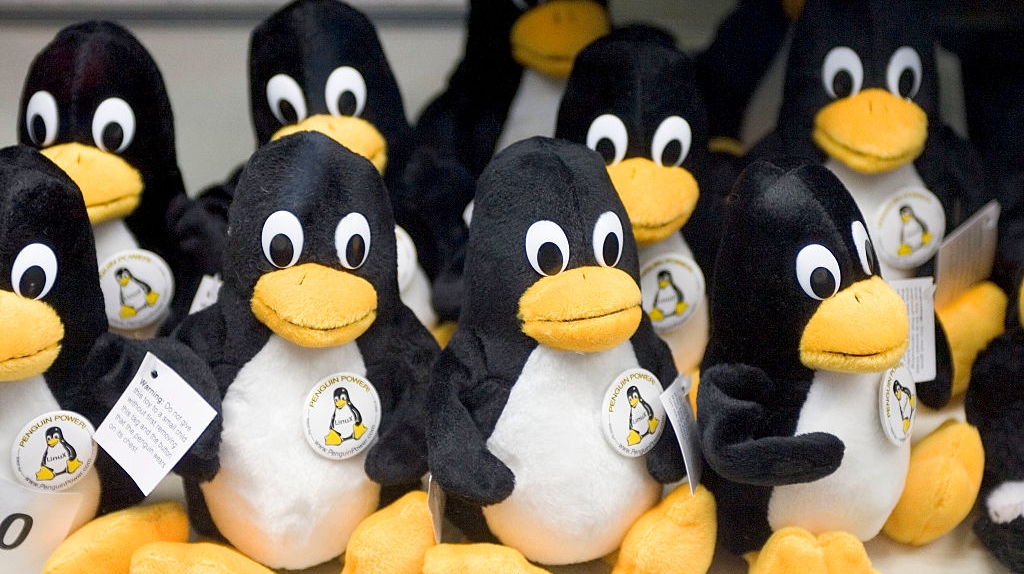
California lawmakers may be backing away from a controversial age-verification requirement bill that alarmed Linux and open-source developers earlier this year, after a new amendment bill proposed exempting most open-source operating systems from the state’s upcoming Digital Age Assurance Act. In practice, that would likely exempt most mainstream Linux distributions — including Debian, Fedora, Ubuntu, Arch Linux, and Mint — from compliance requirements scheduled to take effect on January 1, 2027.
Assembly Bill 1856 (AB 1856), currently moving through California’s legislature ahead of committee reviews in June, would amend the state’s earlier age-assurance law by excluding software distributed under licenses that allow users to “copy, redistribute, and modify the software.”
The proposed amendment specifically states: “Operating system provider” does not mean a person or entity that distributes an operating system or application under license terms that permit a recipient to copy, redistribute, and modify the software.

The amendment follows months of backlash after California passed the original Assembly Bill 1043 (AB 1043), formally known as the Digital Age Assurance Act, in late 2025. The law sought to shift online age verification away from individual websites and apps and down to the operating-system level instead.
Under the original law, operating systems would be required to request a user’s age or birth date during device setup, then expose an “age bracket signal” to apps and app stores. The law, which defined brackets such as “under 13,” “13–15,” “16–17,” and “18+,” immediately raised questions about how such requirements would apply to decentralized, open-source software ecosystems.
Unlike Apple’s iOS or Google’s Android, most Linux distributions are not centrally controlled commercial platforms. Many are community-run projects maintained by volunteers, often without user accounts, telemetry systems, or even formal corporate ownership structures. Critics argued the law’s wording was so broad that it could technically force open-source operating systems to become age-verification platforms.
Privacy advocates, including the Electronic Frontier Foundation, criticized the legislation as invasive and warned it could create infrastructure for broader identity tracking online. Linux developers also questioned how California could realistically enforce such requirements on infinitely forkable open-source software projects.
Get Tom's Hardware's best news and in-depth reviews, straight to your inbox.
The controversy became particularly heated after reports suggested platforms like SteamOS could still fall under the law due to their ties to proprietary application ecosystems. Valve’s Linux-based gaming platform ships with the proprietary Steam storefront and client, potentially placing it closer to Apple’s App Store or Google Play from a regulatory standpoint.
AB 1856 does not repeal the original Digital Age Assurance Act. Instead, it narrows the definition of who qualifies as an “operating system provider” under the law. Commercial platforms with proprietary app ecosystems could remain subject to California’s age-assurance requirements even if most open-source Linux distributions are ultimately exempted.
California Assembly Member Buffy Wicks introduced the amendment on February 11, 2026. However, the open-source exemption language appeared in later revisions that began drawing attention across Linux and privacy communities. The latest version is dated May 18, 2026, and as of May 19, 2026, the bill was read a second time and ordered to third reading.

Follow Tom's Hardware on Google News, or add us as a preferred source, to get our latest news, analysis, & reviews in your feeds.

Etiido Uko is a news contributor for Tom's Hardware covering the latest updates in big tech and the PC industry. He is a mechanical engineer and senior technical writer with over nine years of experience in documentation and reporting. He is deeply passionate about all things engineering and technology, and is an expert in gadgets, manufacturing, robotics, automotive, and aerospace.
-
Reply
1798.500. For the purposes of this title:
They revised it?
(c) “Application” means a software application that may be run or directed by a user on a computer, a mobile device, or any other general purpose computing device that can access a covered application store or download an application.
And they still left this banger of an explanation of what an "app" is in the bill? -
Young people will be more likely to learn Linux.Reply
Would Linux executing in a VM in Windows also be exempt? What about WSL?
I do not know if Apple still gives Apple computers to schools but I think they did in the past. I think the idea is that if they learn Apple in school then they are more likely to use Apple for the rest of their lives. If young people learn Linux then that is likely to increase the popularity of Linux. -
The state of California needs to provide an API, which can be called against the state database, in order to determine the age of the person using the computer.Reply
How they do this, is of course up to them, but I would suggest a restful API, utilizing a credential, which can be verified internationally for every human being on earth.
Again, how they established this credential in the first place, and the session token associated with that credential, is up to them.
I have no problem calling their API. As long as they are the ones responsible for the API, and I am not the one responsible for the API.
If they want the cat belled, then they can bell the cat.
I am perfectly happy to listen for the bell, once the state of California has created and attach the bell to every person on earth.
Dibs on serial number 000–0 00–0 0–0667. -
Reply
Running in a VM or WSL would have no impact as they're still separate OS installations/environments. It would apply to Windows but not the virtualized Linux distro.Sam Hobbs said:Would Linux executing in a VM in Windows also be exempt? What about WSL? -
age verification is 100% pointless and useless unless it can be verified by some other means, as whats stopping a 17 year old, from putting his real birth date and month, but putting 1993 as is birth year when its really 2009 ? hell on one site.. i put own birth year as 1925.. and it still let me continue...Reply
this whole thing is pointless and a waste of time.... -
I wonder if Microsoft or Apple would make some sort of "open source" versions of their operating systems to avoid the law. Don't know why they would do that but it's an interesting situation.Reply
-
Reply
Awesome.Admin said:California lawmakers introduced a new amendment that could exempt most Linux distributions from the state’s upcoming Digital Age Assurance Act after privacy backlash and concerns that the law would force open-source operating systems to become age-verification platforms.
Linux is not DoxxOS, it should not be forced by law into becoming DoxxOS.
This age verification nonsense being embedded into operating systems by law is the biggest story in years, it is so bizarre to go to web sites like Tom's Hardware on a regular basis and the amount of nothingness here, it's like a black hole. It's not like this age verification nonsense is just a Linux issue. It will affect Mac, Android, and also Windows.
It is at times very frustrating the stories that journalists all decide in unison that they will actively refuse to get curious about and report about.
In unison.
It is so angering actually at times because its information that I and others would like to know about, but its not like I can go to this website and see it - it's not there - go to that website over there and see it - it's not there. It's never anywhere. Except for rare tidbits but I'll tell you what the article writers love to try to sneak in political/non technical news in here that stirs up the discussion forums and forces the poor moderators to have to close threads because it was never going to be anything but political discussion in the first place. This is actual tech news. It is constantly being buried. Ignored. Omitted.
How do journalists all magically decide to omit the same information? How are they doing that? I know for 100% certain that it's not actually a conspiracy but by golly it feels all the same as if there is one.
If there was a conspiracy between all of the news websites what the heck would be the difference of the end result of what we actually have now?
Yeah; journalists; really kind of useless. -
Reply
Let's see if Windows puts it in the IoT version.xiq said:I wonder if Microsoft or Apple would make some sort of "open source" versions of their operating systems to avoid the law. Don't know why they would do that but it's an interesting situation. -
And so this bad idea starts to unravel.Reply
Why is ok for open source operating systems to not verify the age of their users and yet Windows and MacOS have to? Basically, this has two effects: unfair competition by making Linux the go to OS for kids to watch porn or adult content on (no, but that is what they claim this act is supposed to stop), and inconsistent application of the law, which just opens the door for Microsoft and Apple to take challenge the law to the Supreme Court and ask that it be quashed on the grounds that it's unfairly discriminatory (laws cannot be drafted in a way to single out entities who aren't themselves breaking the law).
Also, as others have pointed out, what if you installed Linux on MacOS or Windows? That makes bypassing the age restrictions on the computer trivial. Yes, the user is under age. They install VirtualBox and Linux and voila - instant bypass.
As always, when non-technical people draft laws that "regulate" tech, it ends up being a disaster because they do not understand the thing they are legislating against. -
Reply
You're making a primary error: that the people writing for tech sites are journalists.ezst036 said:How do journalists all magically decide to omit the same information? How are they doing that? I know for 100% certain that it's not actually a conspiracy but by golly it feels all the same as if there is one.
If there was a conspiracy between all of the news websites what the heck would be the difference of the end result of what we actually have now?
Yeah; journalists; really kind of useless.
In reality, most are not formally trained in journalism and the main goal of these sites is to get you to stick around reading enough copy-inches to see at least one ad. That's why we've drifted from tight, concise, well written news articles to long, first person opinion pieces framed as news (ie: any article like "I tried X and you should to...") and endless faux competition articles that focus on "Which is better?" when "better" is never defined other than "biggest number" (or made by Apple because a LOT of these non-journalists are Apple fanbois).
It's not just Tom's Hardware - ALL tech sites are like this now. For those of us who have been around tech since the 1960s - the - I want to say slow erosion, but in reality it happened fairly quickly - from news to advertainment has been very disappointing.
Discussion (0)
Sign in to join the discussion. Free account, 30 seconds — email code or GitHub.
Sign in →No comments yet. Sign in and be the first to say something.