Altman forced to confront claims at OpenAI trial that he's a prolific liar
Mirrored from Ars Technica — AI for archival readability. Support the source by reading on the original site.
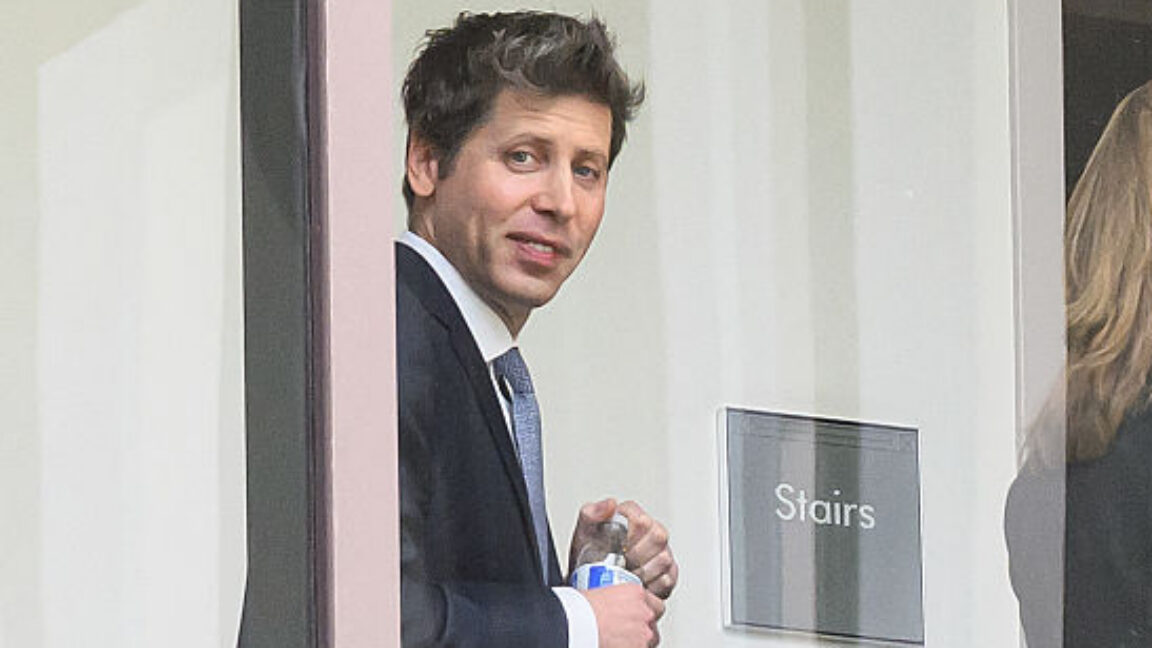
Elon Musk and Sam Altman had very different experiences while testifying at a trial that will determine OpenAI’s future, including who runs it, where its research funding comes from, and who can profit from its boldest new technologies.
Musk—who filed the lawsuit alleging that OpenAI under its current leadership has abandoned its nonprofit mission to build AI that benefits humanity and instead serves to enrich people like Altman—spent three grueling days on the stand. At times, he lost his temper, as OpenAI’s lawyer, William Savitt, tried to poke holes in Musk’s claims that OpenAI executives teamed up with Microsoft to “steal a charity” after duping Musk into donating $38 million in early funding.
On Tuesday, Altman did not face such a grilling from Musk’s lawyer, Steven Molo. Instead, Altman appeared jittery at first but steeled his nerves rather quickly. He hopped off the stand after about four hours of rather calmly discussing evidence that he’s hoping shows that Musk’s claims about OpenAI’s for-profit restructuring are disingenuous. Since Musk filed the lawsuit, Altman has insisted that Musk is only after revenge, supposedly stemming from his jealousy that he was not picked as OpenAI’s CEO and that his rival company, xAI, now lags behind.
But while the billionaires notoriously no longer see eye to eye, Altman revealed at the trial that he had a rather Muskian moment after OpenAI’s board temporarily ousted him as CEO in 2023.
Altman explained that he snapped after losing control over OpenAI, where he’s currently CEO of both the for-profit and nonprofit. He claimed that he seriously entertained walking away from OpenAI forever and taking Microsoft’s offer to instead spearhead an AI research wing of the tech giant, where he could get rich.
“I was extremely angry,” Altman testified. “I felt extremely misled. I was just like, enough is enough. I’m going to go work on a pure AGI research effort.”
He sounded an awful lot like Musk, who told Altman and other cofounders he had “had enough” when they refused to make him CEO. At that time, Musk threatened to start his own AI project at Tesla, which would be better-funded and thus pose a major threat to OpenAI, he appeared to implicitly threaten.
Altman needs the jury to believe that he came back to OpenAI because, unlike Musk, he actually believes in the mission. Yet, like Musk, he appeared ready to abandon that mission on a hair-trigger because the ouster wounded his ego.
“There was something appealing about going to work at Microsoft with [OpenAI President Greg Brockman] on a pure AI research effort,” Altman testified. “And I was also very angry and hurt and upset. It felt like an incredible betrayal and very painful, very public, crazy few days.”
Of course, Musk has used similar language when painting his own exit from OpenAI and his growing fury over the organization’s for-profit shift, which he feels was a betrayal rooted in Altman’s allegedly misleading promises.
Altman’s testimony suggests that the two men may be more alike than they care to admit, sharing similar instincts when it comes to controlling OpenAI. The charged moment on the stand could have exonerated Altman as committed to OpenAI’s mission, with Musk’s lawyer embarrassingly seeming to help Altman’s defense. However, it perhaps more enduringly served to underscore the public’s impression that this trial isn’t a fight to ensure humanity benefits from AI but a battle of egos between two men who want to be seen as AI’s moral compass, while also benefiting maximally from the latest advances.
In the end, Altman testified that he returned to OpenAI under a new board after concluding that, “I’m sure I could have made a ton of money and had a much easier life at Microsoft, but I cared about the mission and the people.”
Altman admits people think he’s a liar
Regardless of their similarities, Altman’s longtime commitment to the nonprofit contrasts with Musk’s moves, Altman’s legal team wants the court to decide. During the trial, Musk has been called out for poaching OpenAI talent to start his own AI research wing at Tesla and for the seeming contradiction that when Musk finally launched his own AI firm, xAI, he did not create it as a nonprofit.
Musk is no AI savior, OpenAI’s legal team hopes the jury agrees. To prove that Musk’s case is a nothing burger, they’ve dedicated considerable time to discussing documents that suggest that Musk would have at least been open to making many of the same moves that Altman did after Musk left OpenAI.
Known to hold a grudge, Musk is unsurprisingly giving everything he’s got to convince the jury that Altman is lying about his intentions for OpenAI. He has repeatedly accused Altman and OpenAI of making a “fool” out of him. And his lawyer, Molo, wasted no time on Tuesday challenging Altman to explain to the court why anyone should consider him “trustworthy” after several OpenAI insiders have documented and testified that Altman regularly lies.
“Are you completely trustworthy?” Molo asked Altman as soon as his cross-examination began.
“I believe so,” Altman carefully responded.
“You don’t know whether you’re completely trustworthy?” Molo pushed back.
“I’ll just amend my answer to yes,” Altman said.
The ensuing exchange found Molo pressing Altman to admit on the stand that he doesn’t always tell the truth, but Altman was clearly prepared to assert that “I believe I’m a truthful person.”
It was the most intense that Molo’s questioning got, with Musk’s lawyer mocking Altman as only pretending that he wasn’t aware that his co-founder, Ilya Sutskever, testified he created a 52-page dossier documenting Altman’s “consistent pattern of lying.” And the judge wanted Altman to respond. She notably overruled Altman’s lawyer’s attempt to object when Molo suggested that Altman had repeatedly been called a liar by people with whom he has done business.
Finally, Altman admitted that he has heard that people say that he’s a liar, but after that win, Molo’s questioning seemed to lose steam.
The only other testy line of inquiry pressured Altman to admit that as CEO of OpenAI’s for-profit and nonprofit arms, Altman had no oversight. Making Altman uncomfortable, Molo asked if Altman would ever consider firing himself if he believed that he had become too greedy as CEO of the for-profit and that his greed was undercutting the nonprofit’s mission.
Keeping his cool, Altman told Molo that he currently had no plans to fire himself but that he might retire someday, which he suggested showed he was willing to cede control to a successor. Later, Molo’s attempt at a gotcha was further dampened when Altman’s lawyer, Savitt, re-examined Altman. At that point, Altman got a chance to redeem himself by noting that OpenAI’s board had fired him in the past. This was supposedly a clear demonstration that Altman’s control over OpenAI isn’t total.
By contrast, Musk did want total control, Altman testified, and he walked when he didn’t get it. And although Altman agreed that Musk had said he would quickly give up that control, Altman didn’t trust that, he testified. He emphasized that when he was at Y Combinator, an incubator for startups, he “had seen a lot of control fights,” where “no one wanted to give up power when things were going well,” The Verge reported.
Further, Altman testified that Musk had also indicated that he might never cede control. Altman claimed that when he asked Musk who might succeed him as OpenAI’s leader, Musk responded, “I haven’t thought about it a ton, but maybe control should pass to my children.”
That was a “particularly hair-raising moment,” Altman testified.
Musk tried to “kill” OpenAI, Altman says
After Molo’s cross-examination ended, Savitt got Altman to further explain a text exchange that Musk’s lawyer highlighted, where Altman told Musk that he couldn’t have done OpenAI without him.
Messages where Altman appears ingratiated to Musk seem to show that Musk did most of the heavy lifting when OpenAI was founded and therefore should be awarded damages up to $150 billion, which Musk intends to donate to OpenAI’s nonprofit.
But Altman has claimed that Musk’s math makes no sense, essentially reducing the contributions of the other co-founders and OpenAI’s leading researchers to “zero.” On the stand, he testified that where other co-founders spent “every waking hour” building OpenAI, Musk only dropped in every other week or so and was mostly available via text and email when needed.
Acknowledging the supposedly contradictory text to Musk, Altman testified that he has “many times” told Musk that he’s “grateful” for his help getting OpenAI off the ground. But that ultimately the best thing for OpenAI was for Musk to leave because his aggressive management style harmed morale and risked driving out talent. Notably, Musk nearly drove away a leading researcher after feeling unimpressed by an early presentation on a proto-ChatGPT model, OpenAI’s lawyers alleged.
According to Altman, Musk did not truly understand AI at the time and was not the right fit culturally to lead OpenAI.
“This idea that you had to show your result or you’re going to be fired—that didn’t work for us,” Altman testified, describing Musk’s management tactics made famous by his efforts slashing Twitter staff and leading the Department of Government Efficiency.
Altman’s testimony ended when Musk’s lawyer confirmed he had no further questions. That stunted conclusion seemed somewhat damning to Musk’s case, especially after Savitt gave Altman a chance to remind the jury that Musk had repeatedly seemed to threaten to kill the charity if he didn’t get to control what happened to it. Without a for-profit arm, Altman has maintained that the charity cannot secure the funding it needs to compete with deeper-pocketed rivals and uphold its ambitious mission.
Savitt’s first question after Molo’s rather tepid cross-examination asked Altman how he responds to Musk’s claims that he stole a charity.
“It feels difficult to even wrap my head around that framing,” Altman testified. “We created, through a ton of hard work, this extremely large charity, and I agree you can’t steal it. Mr. Musk did try to kill it, I guess. Twice.”
Lawmakers probe Altman’s investments
As the Verge’s Elizabeth Lopatto, who is attending the trial, noted, Altman seemed to succeed in convincing the jury that he’s the more likable and “credible” of the two billionaires. And it even seems like OpenAI may win the trial, based on all the evidence showing that Altman tried to loop Musk in as OpenAI’s structure changed, with seemingly no objection until now. Microsoft’s lawyer even took a jab at Musk’s intentions, asking Altman to testify about other major investors whom Musk has curiously not sought to wrangle into the lawsuit.
But if Altman is right that Musk is simply after revenge, Musk may be winning that chess game, as the trial has stoked broader inquiries into Altman’s potential self-dealing. At the trial, Altman shocked onlookers by admitting for the first time that he had equity in OpenAI, which he secretively secured through an indirect stake via Y Combinator, Mashable reported.
Molo called out Altman who, when testifying to Congress, appeared to hide that he has equity in OpenAI, and lawmakers are now probing if Altman may be abusing the OpenAI nonprofit to further his other personal investments.
Last Friday, Rep. James Comer (R.-Ky.), who chairs the House Committee on Oversight and Government Reform, sent a letter to Altman confirming the investigation. Like Musk, Comer said that his committee “aims to ensure that funds donated for charitable purposes are not diverted for unintended uses, such as artificially increasing the market value of other companies in which an executive or board member may hold an interest.”
Comer is hoping to get OpenAI to disclose results of an audit examining Altman’s potential conflicts of interest, which was conducted under its new board following Altman’s reinstatement as CEO in 2023.
According to Forbes, Altman quickly committed on Tuesday to responding to all of Comer’s questions.
It’s possible that the OpenAI trial will conclude before that probe ends, though, leaving OpenAI with more potential fires to put out even if they win. Closing arguments start Thursday, and Judge Yvonne Gonzalez Rogers has said a decision could come as early as next week.
More from Ars Technica — AI
-
AI invades Princeton, where 30% of students cheat—but peers won't snitch
May 13
-
Anthropic blames dystopian sci-fi for training AI models to act “evil”
May 13
-
Rivian adds a new onboard AI assistant to its latest software update
May 13
-
The newest AI boom pitch: Host a mini data center at your home
May 12
Discussion (0)
Sign in to join the discussion. Free account, 30 seconds — email code or GitHub.
Sign in →No comments yet. Sign in and be the first to say something.