A Complicated Comeback for Stanford’s Ex-President
Mirrored from The Information — AI for archival readability. Support the source by reading on the original site.

Welcome, Weekenders! In this newsletter:
• The Big Read: The tech elite’s go-to real estate broker? The mayor’s brother
• Crypto: Inside crypto’s Washington command center
• Lists: 20 great books for summer 2026
• Plus, Recommendations—our weekly pop culture picks: “John Kiriakou’s Dead Drop,” “Returning” and “The Testaments”
Lately, it seems that Marc Tessier-Lavigne has been popping up everywhere.
The neuroscientist, ex–Stanford University president and former Genentech executive has been making the rounds at various biotech and scientific conferences to talk up Xaira Therapeutics, an AI drug discovery startup he runs and co-founded. Xaira emerged from stealth in April 2024, announcing it had secured an impressive $1 billion in funding. Six months later, another co-founder of Xaira, David Baker, won the Nobel Prize. Xaira has shared some glimpses into its work since then, publicly releasing last year a large dataset of millions of cells, which researchers can use for AI training.
I caught one of Tessier-Lavigne’s talks earlier this month when we both attended the SynBioBeta conference, an annual gathering in San Jose, Calif., for techno-optimists and AI enthusiasts. When he came out on the stage, I was intrigued to hear what he had to say.
He and Anthropic’s new head of life sciences, Eric Kauderer-Abrams, politely took turns speaking to each other about how AI is poised to transform drug discovery.
You might have a great drug, Tessier-Lavigne told the audience, but it’s hard to know which patients are going to benefit from it—that’s why so many drugs crash and burn, never making it out of clinical trials. AI is going to change all that with better predictions about what drugs will work, he promised.
There was no mention in their onstage discussion that it had been less than three years since Tessier-Lavigne stepped down as Stanford president following allegations of data manipulation and research misconduct related to scientific articles he co-authored. His fall from grace followed hard-hitting investigative reporting in The Stanford Daily, a student-run newspaper.
A panel of scientists that investigated the mess for Stanford concluded that Tessier-Lavigne hadn’t engaged in misconduct. But they criticized his oversight of his labs and his failure to push hard enough to correct mistakes once they came to light. I helped cover the story while working as a health and science reporter at The Wall Street Journal, but I had not written about him since.
Tessier-Lavigne’s appearance had the feel of a highbrow comeback tour. He dressed the part of the respected scientist: a light-blue button-down shirt and dark blazer. He seemed in his element, touting Xaira’s progress in using AI to design proteins from scratch.
And yet, at a different conference, I noticed a distinct vibe shift around his reemergence into the public eye, which suggests his return will likely be at least a little complex.
Earlier this week, during an onstage interview at a conference hosted by Stat, a health and science news site, Tessier-Lavigne had to listen to his interviewer read a passage containing unflattering (albeit anonymous) comments about his “admit nothing, deny everything” approach when reports about problems with some papers emerged in the press. The text came from “How to Rule the World: An Education in Power at Stanford University,” a buzzy new book by Theo Baker, the Stanford student journalist who pursued and broke the story about Tessier-Lavigne.
At the STAT conference, Tessier-Lavigne’s interlocutor pointed out that public trust in AI and the pharma industry are both low. The splashy rollout of Baker’s book seemed unlikely to bolster confidence. Tessier-Lavigne responded that Xaira’s board of directors and board of scientific advisers had done their homework before offering him the job. He added, “I’d say their actions speak louder than any words I could have.”
Later, Tessier-Lavigne told The Information he’s excited to work on AI drug discovery, which he called “the most exciting development in biomedicine in my lifetime.” As for the book, he said people who know him understand it “does not accurately represent my 35-year career as a scientist, a researcher and a leader.”
I tracked down Baker, who was on the road for his book tour and planned to head back to Stanford in time for graduation in June. Baker said he was unsurprised to see Tessier-Lavigne back in the spotlight. “In Silicon Valley,” Baker said, “once you’re in the system, you’re in the system.”—Amy Dockser Marcus ([email protected])
Weekend’s Latest Stories
The Tech Elite’s Go-To Real Estate Broker? The Mayor’s Brother
Alexander Lurie, younger brother of San Francisco Mayor Daniel Lurie, has become a must-know procurer for anyone who wants to survive what may be the craziest luxury market in city history.
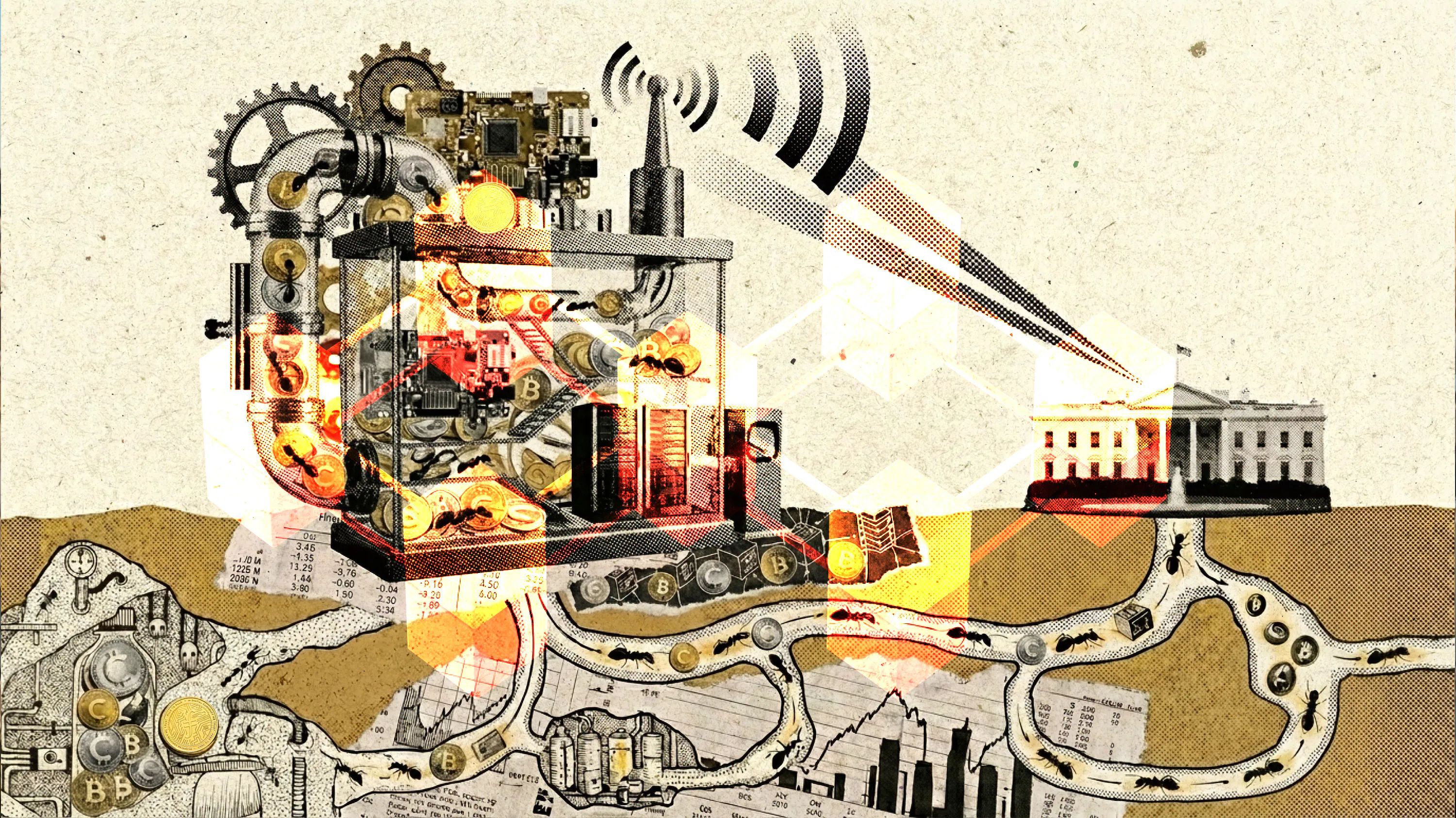
Inside Crypto’s Washington Command Center—and Blitz for Legitimacy
A hive of activity on F Street has propelled the industry’s push to win favor in the nation’s capital.

20 Great Books for Summer 2026
Lounge in the sun with an AI odyssey, a techno-dystopia thriller, a chronicle of San Francisco tumult, a tropical dark comedy and more.

Listening: “John Kiriakou’s Dead Drop”
John Kiriakou’s favorite thing to talk about is John Kiriakou, and the former CIA officer tacitly acknowledges that fact up front in “John Kiriakou’s Dead Drop,” a podcast about—yes—himself and his time at the agency. Given the ego and the subject matter, I initially figured the pod would get mired in tedious, unoriginal recollections: After all, plenty of former spies like retelling their old spy stories. But Kiriakou’s CIA tenure was unquestionably a strange one. And he is a darn good storyteller.
Throughout the 1990s into the 2000s, Kiriakou was a rising star in the spook world. Then, in 2007, he turned whistleblower and became the first government employee to publicly acknowledge the existence of America’s waterboarding program in an ABC interview. Five years later, he was charged with leaking separate classified information to journalists and received a 30-month prison sentence, which he viewed as payback for his decision to come forward about the CIA’s torture tactics.
In relating his experiences, Kiriakou shows a real knack for pacing and details, and the intimacy of a podcast suits his adeptness as a conversationalist, which he obviously put to good use in the field. I’m sure he could talk me out of my bank account password without much trouble.—Abram Brown
Reading: “Returning” by Nicholas Lemann
Most Jewish-American sagas seem to take place below 14th Street in Manhattan or on a Los Angeles back lot. Lemann, a venerable New Yorker scribe and a former contributor to The Atlantic, points his attention in another direction—down south. He returns to his hometown, New Orleans, to catalog his family’s deep, centurieslong relationship with the city and their fraught hold of religion and identity.
His forebear, Jacob Lemann (his German-born great-great-grandfather), came in the 1830s to New Orleans, where the clan prospered: A century later, Monte Lemann (his Harvard-educated grandfather) was a Franklin D. Roosevelt consigliere and a Democratic party leader in the Deep South. As Lemann narrates the family’s rise, he paints an evocative picture of yesteryear New Orleans, where life flowed between Charles Avenue mansions and the dim, wood-paneled corridors of power. (I could practically taste the chicory in the coffee.) Stratification and codification marked that society, and the Lemanns adopted its prioritization of rituals. Through the mid-20th century, for instance, the men working at the family law office would swap neckties for bow ties on Saturdays as a signal that the weekend had arrived.
The Lemanns strived for assimilation, identifying as Southerners first and Jews second, but they could never shake the worry that they’d never fully blend in. They embraced a secularized Christmas season with a tinseled fervor, and upon Nicholas’ teenage admission to an exclusive high-society ball, his father, Thomas, dispensed stark instructions: While the event allowed him to bring along two or three or guests, Thomas forbade him from inviting any fellow Jews. It would, his father feared, make them appear offputtingly “clannish.”—A.B.
Watching: “The Testaments”
Among the many talents within Paul Thomas Anderson’s “One Battle After Another” was actress Chase Infiniti as the teenage daughter of Leonardo DiCaprio’s disheveled revolutionary. It earned her a Golden Globe nomination, and she held her own in a picture that also included Sean Penn, Teyanna Taylor and Benicio del Toro. In Hulu’s “The Testaments,” an adaptation of Margaret Atwood’s sequel to “The Handmaid’s Tale,” she gets an even fuller spotlight.
Hulu adapted “The Handmaid’s Tale,” too, giving Elisabeth Moss her first post–“Mad Men” big role as its grim heroine, June. And like its predecessor, “The Testaments” is an ensemble piece that draws much of its energy from the talent of its main star. The setting is the same in both, too: Gilead, the ultrareligious nation that has overthrown the U.S. government in a dismal future of war and a fertility crisis. Infiniti plays Agnes, who is a Plum, Gilead’s term for the young daughters of the country’s leaders. She and her friends long to marry well and become Greens. (Their society is literally color coded, separating castes by monochromes.) Of course, marriage is not all it’s cracked up to be—especially in Gilead. Complicating matters further is her connection to June—Moss makes a few guest-star appearances.
Through the cycle of courtship, Agnes is given the responsibility of nurturing Daisy (Lucy Halliday), who arrives in Gilead from Canada seemingly seeking a better life. There’s much more to Daisy, though, and more to the person in charge of her and the other girls: Aunt Lydia (Ann Dowd), a returning “Handmaid’s Tale” adversary, whose villainy gets complicated with a backstory and an inner monologue.
I worry “The Testaments” will run out of narrative steam as “The Handmaid’s Tale” eventually did: Both have just a single novel for source material. Yet for the moment, “The Testaments” delivers solidly on its promise of expanding Gilead’s quiet discomfort and dread: Infiniti does trembling poise well.—A.B.
Discussion (0)
Sign in to join the discussion. Free account, 30 seconds — email code or GitHub.
Sign in →No comments yet. Sign in and be the first to say something.