Nvidia bets $150B on Taiwan as Trump's plan to make US an AI hub backfires
Mirrored from Ars Technica — AI for archival readability. Support the source by reading on the original site.
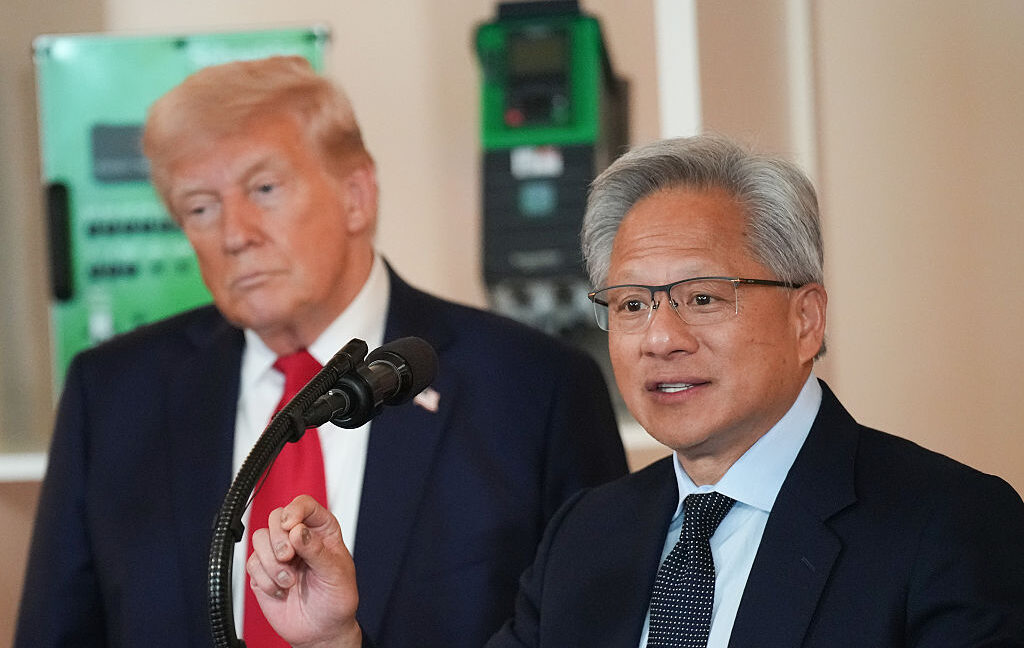
In a splashy move that signals that Taiwan remains irreplaceable to the AI industry’s short-term and long-term goals, Nvidia CEO Jensen Huang announced Wednesday that his chip company will invest $150 billion a year to make sure Taiwan remains at the “epicenter” of the “AI revolution.”
“This is where the chips come, packaging comes, this is where the systems are made, this is where AI supercomputers were created,” Huang said. “The number of partners we work with here in Taiwan, incredible.”
As Reuters reported, the substantial investments will be used to create a new Taiwan headquarters for Nvidia, which Huang expects will drive so much AI innovation that the partnership will cement Taiwan as “the world’s tech manufacturing hub for a long time.” That ambitious project will be operational by 2030, Nvidia anticipates, after breaking ground this year.
“Four years ago, five years ago, Nvidia was spending about 10, 15 billion dollars a year in Taiwan,” Huang said at a ceremony celebrating the launch of the company’s new Taiwan base. “Now we’re spending 100, going to 150 billion dollars in Taiwan each year.”
Nvidia is currently the world’s most valuable company, making history in 2025 after becoming the first company to reach a $5 trillion market capitalization. And Huang bragged that the Taiwan base will make sure Nvidia is “worth even more in three to five years.”
But Huang has so far not explained how Nvidia’s plans in Taiwan may potentially conflict with Donald Trump’s push to make the US the world’s AI hub.
Nvidia did not immediately respond to Ars’ request to comment on this seeming tension.
Nvidia needs Taiwan HQ to meet demand
Last April, Nvidia started producing AI chips on US soil for the first time. The move seemed designed to appease Trump, who had been pressuring US firms to increase domestic manufacturing, a top priority of his AI Action Plan.
At that time, Huang said that “the engines of the world’s AI infrastructure are being built in the United States for the first time,” because “adding American manufacturing helps us better meet the incredible and growing demand for AI chips and supercomputers, strengthens our supply chain, and boosts our resiliency.”
Over the next four years, he projected that Nvidia could produce up to half a trillion dollars of AI infrastructure in the US—but it was hard to see how Nvidia could race to achieve that result when the company still relied on shipping chips to Taiwan for advanced packaging.
Now, Huang seems to be confronting that reality head-on, prioritizing more investments and deepening partnerships in Taiwan at a time when Huang claims that overwhelming demand for agentic AI is accelerating AI factory buildouts “at extraordinary speed,” The Guardian reported.
While the US investments will surely factor into Nvidia’s growth, it’s the Taiwan HQ that seemingly matters most.
Tech giants collectively plan to spend $750 billion on AI infrastructure this year, with “a significant portion” of that expected to “go towards chips for data centers,” the Guardian noted, and Nvidia needs a plan to keep up with that rapidly spiking demand. Then there’s also Nvidia’s new AI system, Vera Rubin, to consider, which Huang claimed would be a “generational leap” that’s going to be “kicking off the greatest infrastructure buildout in history.” Nvidia fears it will face supply chain constraints “throughout the entire life of Vera Rubin,” Huang said.
Perhaps to Huang, the Taiwan base looks like a lifeline for that and future systems.
Before Trump’s AI Action Plan rolled out, Nvidia had previously manufactured all its AI chips exclusively in Taiwan. So, the firm is well acquainted with the benefits of working in that ecosystem.
With its Taiwan HQ, Nvidia hopes to expand its partnership with the Taiwan Semiconductor Manufacturing Company (TSMC), while benefiting from close proximity to advanced packaging technology not yet available at TSMC’s US factories. And Nvidia can also “boost its alliances” with other nearby partners playing “key roles in the build-out of AI servers and infrastructure,” like Foxconn, Wistron, and Quanta Computer, Reuters reported.
For Nvidia, the focus appears to be on expanding the AI ecosystem to further its bottom line. Earlier this month, Huang told CNBC that Nvidia would be “aggressively” expanding its supply chain and suggested that the “first priority for its growing cash pile was supporting suppliers amid surging demand.”
Trump’s plans for Nvidia chips backfired
Trump has not yet commented on Nvidia’s plans in Taiwan, but the US president has repeatedly praised Huang as brilliant, while consulting with Huang on AI industry and tariff questions. Over the past year, their ties have grown, with Huang making commitments to perhaps avoid the consequences of Trump’s tariff regimes. Last year, Huang paid $1 million to attend a Mar-a-Lago dinner, then promised to invest $500 billion in US data centers. Shortly afterward, Trump halted plans for export controls blocking some of Nvidia’s chips from China’s market.
But Huang may be too smart to be all-in on Trump’s AI plans, perhaps increasingly recognizing that Trump’s export controls and tariffs aren’t working as planned to ensure US dominance in AI.
Directly impacting Nvidia, Trump’s plan to give the US a 25 percent cut of certain Nvidia chips sold to China seemingly backfired, since China has refused to purchase the chips. China’s refusal is reportedly not due to paying the fee, but due to a requirement that all chips subjected to the fee must be routed through the US. China seems worried that the US might tamper with chips sold in its markets, and Nvidia is pretty sure that Beijing won’t budge on buying its chips any time soon, so long as Trump’s policy remains in place.
For Huang, the goal remains to sell Nvidia chips in China’s market, which the company recently told investors it has “largely conceded” to Huawei. And about a month ahead of Trump’s meeting with China’s president, Xi Jinping, Huang told the US think tank the Special Competitive Studies Project that Trump’s export curbs blocking its chips from China have “already largely backfired.”
“Conceding an entire market the size of China probably don’t make a lot of strategic sense,” Huang said, whereas giving US chip companies access to China’s market where AI demand is spiking “makes a lot of sense.”
But Huang has to be careful navigating Trump, who likely still relies on Huang despite their perhaps disparate views on where the global AI hub should be. When Trump tapped Huang at the last minute to attend a summit with China’s president, Xi Jinping, in Beijing, Huang reportedly dropped everything to go, seemingly in the hopes that Trump would convince China to buy Nvidia chips.
However, experts agreed that Trump had little leverage at the summit, and it was later confirmed that US export curbs were not discussed. After the meeting, Trump confirmed that China had no plans to buy Nvidia’s chips because “they want to develop their own” and already have a chip that’s more advanced than Nvidia’s product, the H200.
Looming chip tariffs
Ultimately, the summit may have been a wasted trip for Huang, who might be tiring of Trump’s trade tactics, despite exemptions from tariffs that have seemingly benefited Nvidia.
So far, Trump has exempted semiconductors to be used in data centers from tariffs. But Nvidia likely knows that could change soon.
In July, official investigations into whether more tariffs are needed to protect national security will conclude. Among the most feared tariffs that could come, there’s a threat looming over the AI industry that Trump “may issue ‘significant’ additional tariffs” on semiconductors used in data centers in order “to encourage domestic manufacturing,” a supply chain management newsletter called Supply Chain Dive reported.
Currently, the US only fully manufactures about 10 percent of the chips it requires, a Trump proclamation read. That is “too low to meet projected national defense needs and to match the requirements of a growing commercial industry,” Trump said, ordering the probes to see if substantial tariffs might be needed to stop firms from relying so much on importing semiconductors.
Last week, US trade representative Jamieson Greer said that “the Trump administration continues to weigh US tariffs on imported semiconductors to boost domestic chip manufacturing, though there are no immediate plans to impose any new levies,” Bloomberg reported. However, “Greer stressed the importance of using import duties to bring chip production back to the US,” confirming that Trump’s goal is to “facilitate the reshoring” of the semiconductor supply chain.
Huang bets on Taiwan
For Nvidia, commitments to invest in the US may be enough to avoid future tariffs, Greer suggested. That makes it appear as if Huang has been successful at both influencing and staying ahead of Trump’s next moves.
But Trump seems unlikely to take kindly to Huang’s mission to ensure Taiwan maintains dominance in the semiconductor industry.
Trump has recently sent confusing signals on the US position on Taiwan, which he has irrationally accused of stealing the semiconductor industry from the US. Last October, Taiwan rejected Trump’s demands to move 50 percent of its chip production into the US or else lose US protection from a potential Chinese invasion. Although Trump recently approved the largest-ever weapons package to support Taiwan’s defense, he has said it’s up to Xi to decide if China will invade Taiwan or not, which experts warned expressed US indifference.
Although the US likely needs more time than Trump’s presidency to achieve the goals of the AI Action Plan, Trump seemingly thinks that pressuring Taiwan to shift its production could be a shortcut.
Whether Taiwan will ever bend to that pressure remains to be seen, as it has sought to strengthen its own communications with the Trump administration. Experts have suggested that explosive AI demand will, over time, diminish Taiwan’s lead, currently producing over 90 percent of the world’s most advanced semiconductor chips. Countries that have experienced global chip shortages have realized that it’s foolish to rely on one supplier, and it’s expected that the supply chain will diversify, as leading nations pioneering AI build up their own domestic manufacturing or seek to support allies doing the same.
Huang does not appear to expect Taiwan’s dominance to wane any time soon, though. He was born in Taiwan before emigrating to the US at the age of 9, and while he did not indicate exactly how long he intends to invest $150 billion a year into Taiwan projects, he did suggest that Nvidia’s future hinged on establishing a headquarters there, while seeming to take pride in Taiwan’s accomplishments.
“Taiwan is booming,” Huang said at the launch.

Discussion (0)
Sign in to join the discussion. Free account, 30 seconds — email code or GitHub.
Sign in →No comments yet. Sign in and be the first to say something.