Why things will eventually fall apart
Mirrored from Marcus on AI for archival readability. Support the source by reading on the original site.
Part I: The Math
1. Everybody, even Google, seems to be treating AI as if it were some kind of winner take all competition like web search was, in which Google taking over 90%
2. But everybody is building essentially the same technical solution with essentially the same data, so there is no moat.
3. If there is no moat, nobody is going to take 90% of the market.
4. With no clear winners, nobody can charge monopoly prices; instead, you get price wars and commodity pricing.
5. Which means everybody will wind up overpaying compared to the modest profits they will be able to make in an intensely competitive regime.
Am I missing something?
Part II: The Psychology
None of that would matter in the near term if people weren’t noticing.
But they are. Consider:
When I posted the above last night on X, sparked by the jawdropping announcement that Google of all places was raising equity financing , over 750,000 (and counting) viewed the tweet overnight. And what’s more most people agreed, which in that crowd is very rare.
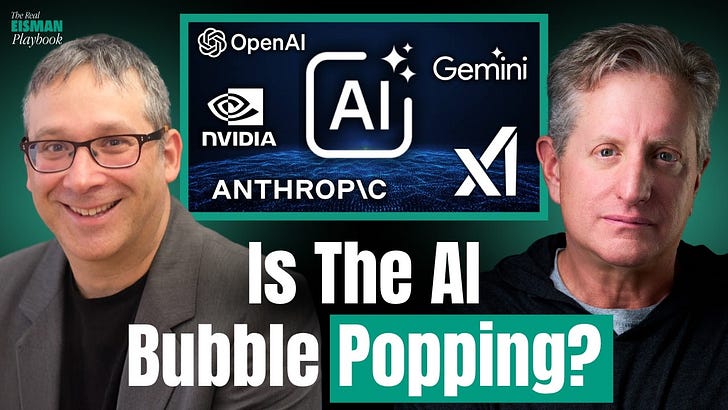
The financial world is taking a lot more notice of my skepticism than it used to. Just yesterday two significant (and excellent) podcasts with me just dropped, a return to the show hosted by the well-known Steve Eisman (played by Steve Carrell in The Big Short): and the other a four-hander with the well-known investor George Noble, the economist Julie Garran and the financial analyst/reporter who is known in the youtube world as @nobodyspecial. Everyone involved in both podcasts share my concerns, and had sharp arguments of their own to add. Garran’s distillation of why the LLM industry will never be commercially viable was crystal clear and compelling.
My critique of tokenmaxxing is getting picked up, too; everybody seems to think that trend is over. And companies like Anthropic are ending their all you can eat buffet, which will make many customers think twice.
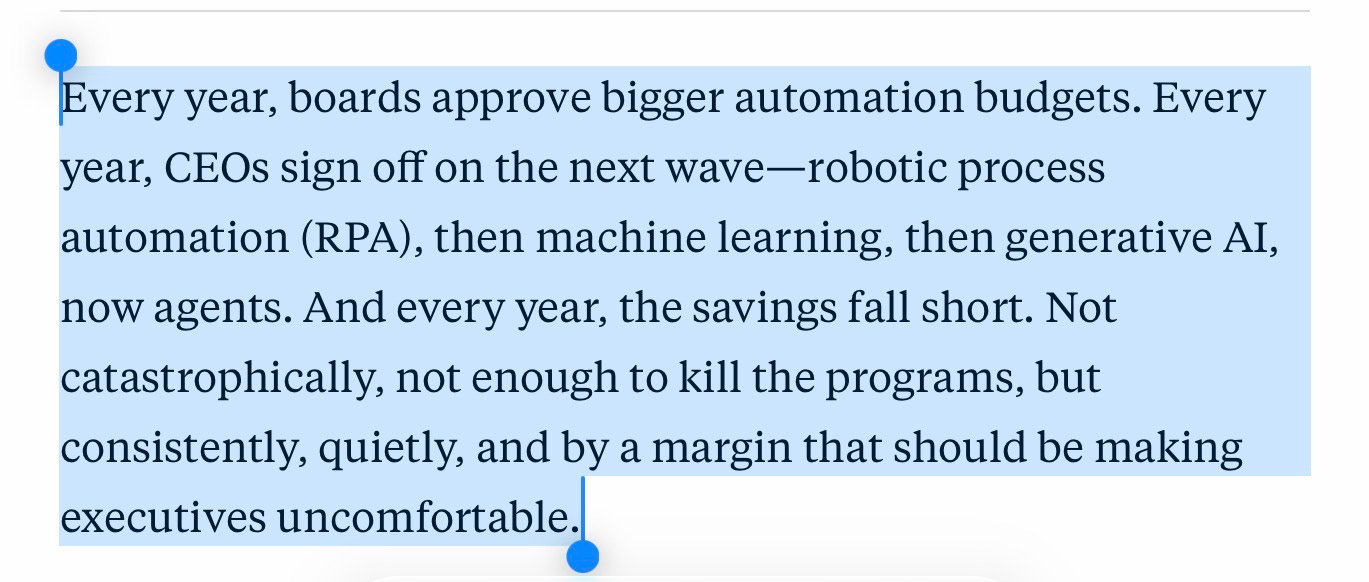
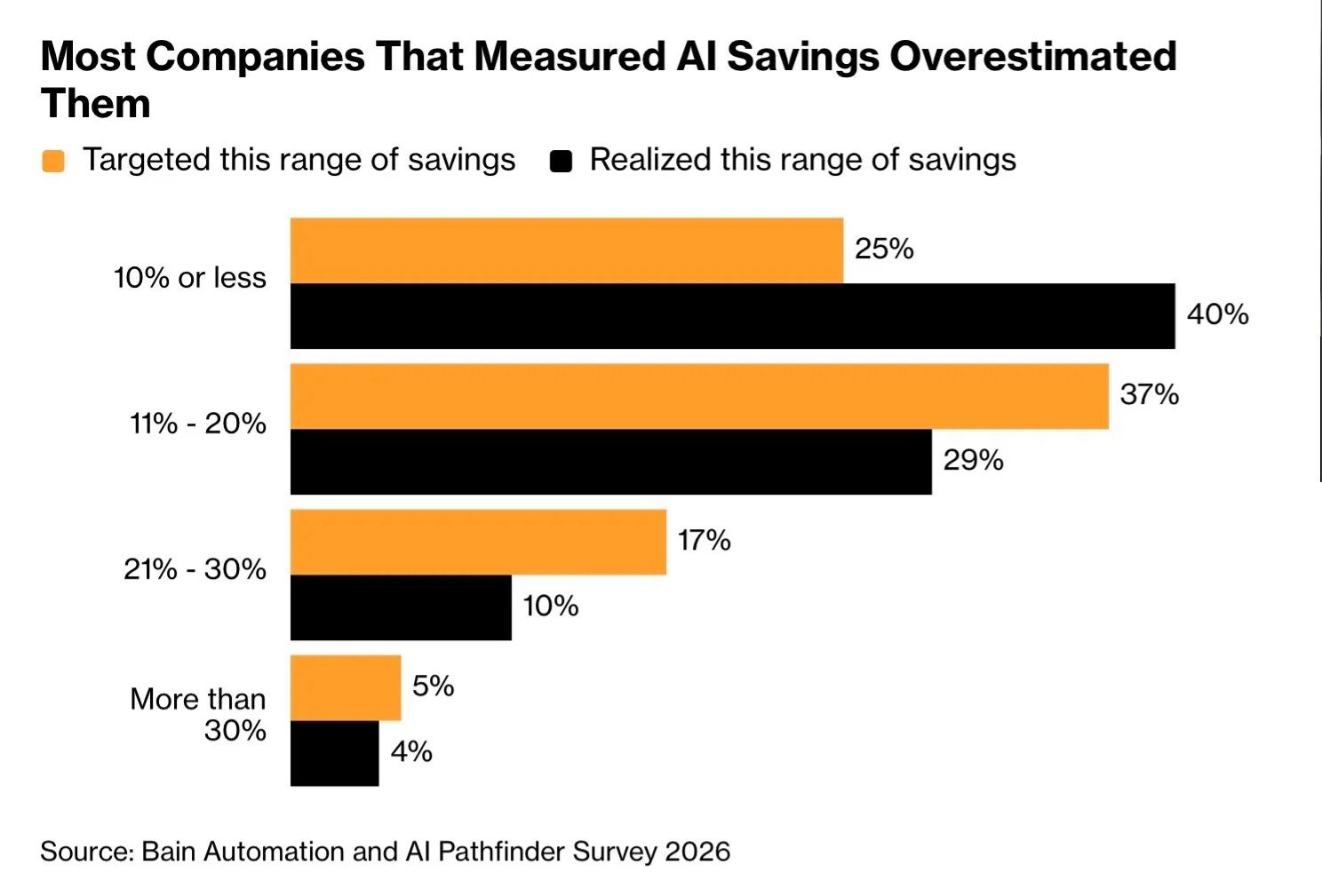
Still more reports have coming out questioning the RoI for corporate customers. Bain’s conclusions yesterday almost perfectly the old definition of insanity that I keep quoting (doing the same thing over and over again and expecting different results):
§
Timing when all this might fall apart is hard, but the economics don’t make sense, and more and more people are starting to notice.
What is most upsetting though, is how retail investors and retirement funds are likely to be taken advantage of in all of this.
Same will happen with Anthropic and OpenAI. All of which led me to this prediction yesterday:
I seriously hope that I am wrong about this. But I doubt it.
To close, here’s one more economist, reaching basically the same conclusions; I leave the last words with him:
The technology is powerful but unreliable. It must be boxed into narrow, supervised uses. The economics of inference are unforgiving. The competitive environment is crowded, with open models and vertically integrated hyperscalers eroding any pricing power that an independent lab might hope to have.
What is the plausible, well‑specified path by which Anthropic or OpenAI grow into the kind of durable, high‑margin franchises that would justify the valuations their private rounds have implied?
There is none visible.

Discussion (0)
Sign in to join the discussion. Free account, 30 seconds — email code or GitHub.
Sign in →No comments yet. Sign in and be the first to say something.