Energy supplier abandons Lake Tahoe residents to serve data centers
Mirrored from Ars Technica — AI for archival readability. Support the source by reading on the original site.
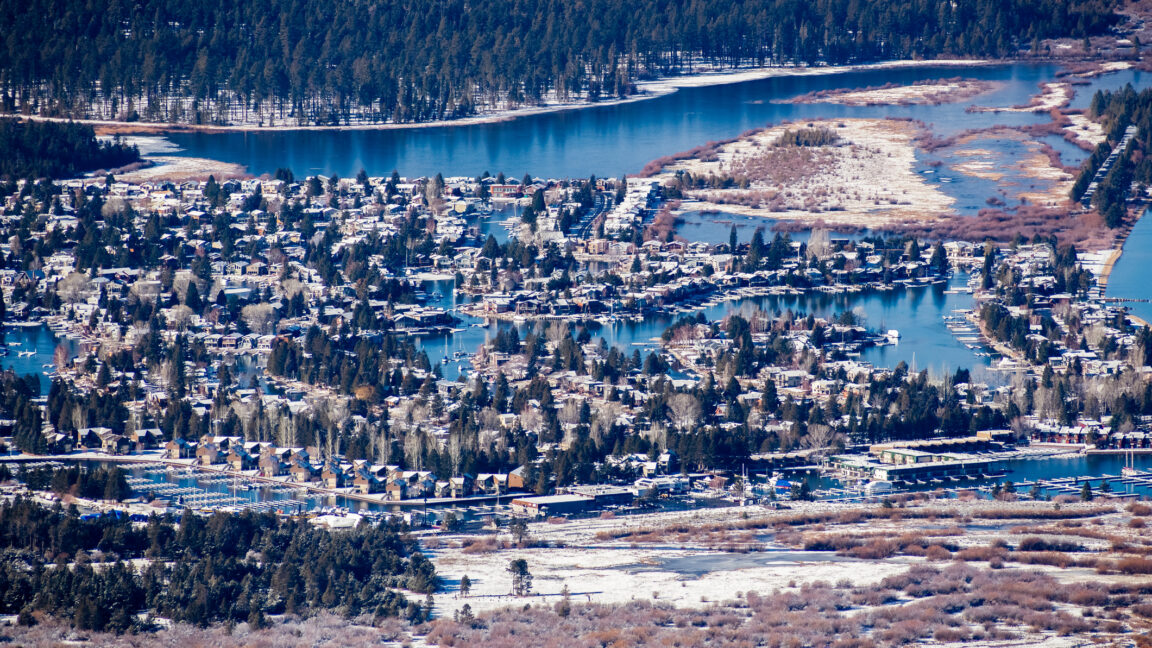
The tourist and ski resort town of Lake Tahoe must scramble to find a new energy supplier by May 2027—the result of a Nevada utility company saying it needs the power capacity in part for new data centers. The resulting energy crisis impacts 49,000 California residents who live near Lake Tahoe, nestled in the Sierra Nevada mountains on the border between California and Nevada.
Lake Tahoe’s local electricity provider, California-based Liberty Utilities, has been obtaining 75 percent of its power from the Nevada-based company NV Energy. But the latter has said it will stop providing power to the Lake Tahoe region by May 2027, according to extensive reporting by Fortune.
Nevada’s fast-growing data center development is one of the main reasons given by NV Energy for ending its energy supply agreement with Liberty, according to a Liberty filing with California regulators. Fortune highlighted data from NV Energy’s own planning documents showing that a dozen data center projects in northern Nevada could drive 5,900 megawatts of new demand by 2033.
Such data center demand has also spurred NV Energy to sign contracts with tech companies to secure additional power-generation sources. Amazon recently agreed to support the Nevada utility company’s deployment of 700 megawatts of “low-carbon energy” for Reno data center operations, including 100 megawatts of geothermal energy, according to Data Center Dynamics.
However, NV Energy representatives pushed back on the idea that data centers are the main culprit behind the decision to stop supplying energy to the Lake Tahoe community, telling Fortune that it was part of a long-term transition predating the AI boom. After NV Energy initially sold its California assets to Liberty in 2009, it struck a series of temporary agreements to keep providing power to Lake Tahoe until Liberty could secure another energy supplier.
Now, for whatever reason, NV Energy has decided it cannot keep extending such agreements. That leaves Liberty scrambling to find a new energy supplier as it plans to offer a replacement contract for any bidders capable of meeting California’s renewable energy requirements.
Seeking solutions
The situation is further complicated by the fact that “no single regulator oversees the entire chain from power generation to customer bills,” according to Fortune. California residents of Lake Tahoe pay rates approved by California state regulators, but the Liberty grid that services them sits under NV Energy’s authority and is fully reliant on Nevada power transmission lines.
NV Energy is constructing a new $4.2 billion transmission line, called Greenlink West, that could help Liberty access a wider pool of energy suppliers. But as Fortune points out, the transmission project is scheduled to become operational by May 2027, which would be cutting it close for Liberty and Lake Tahoe’s needs.
Lake Tahoe’s woes may currently be an outlier, but many other US communities are grappling with energy supply issues and other associated costs of data center development—a Gallup poll from March 2026 found that seven in 10 Americans opposed AI data centers in their communities.
Public opposition to data centers has coalesced into “the most bipartisan issue since beer,” according to a Milwaukee-based comedian quoted in The New York Times. Nearly half of data center projects are facing delays and data center moratoriums, with industry executives citing issues such as labor shortages and power constraints as key factors.
Silicon Valley is well aware that its AI data center buildout has a popularity problem on top of the energy supply bottleneck and other construction complications. That may explain the turn to unusual schemes such as offering homeowners the chance to host mini data centers, along with more quixotic proposals such as launching orbital data centers into space and floating AI data centers in the middle of the ocean.

Discussion (0)
Sign in to join the discussion. Free account, 30 seconds — email code or GitHub.
Sign in →No comments yet. Sign in and be the first to say something.