Could generative AI could turn out to be the tech industry’s Vietnam? And could public backlash lead AI to a better place?
Mirrored from Marcus on AI for archival readability. Support the source by reading on the original site.
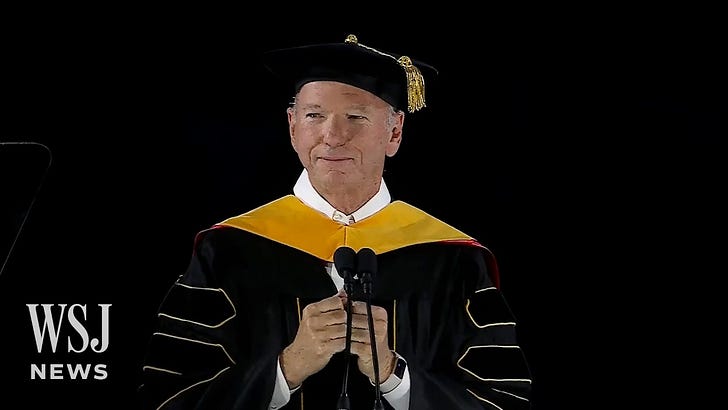
As I am sure you have heard by now, the backlash against AI i keep nattering on about is growing fast. At least three commencement speakers, include Google’s one time CEO Eric Schmidt were booed over the last few days simply for mentioning AI.
This lead Jason Calacanis (of All In) to draw a parallel
But I think the analogy might run deeper. And Jason may be underrating the student’s chances here (see later part of this essay).
In the Vietnam war, the US invested massively in a huge, disastrous campaign that drained resources and achieved nothing, fueled by arrogance. The war moved forward for years despite evidence that it wasn’t working as planned. It was also ridiculously expensive, about a trillion in today’s dollars.
Could the multitrillion dollar investment in AI, burning money at unprecedented rates, and still struggling with hallucinations, unreliability and misalignment – even after truly massive investments, turn out to be another epic arrogance-fueled mistake?
Every time I think about the numbers and lack of RoI for most pilot studies and the reliability problems I think so. (Discussion in the comments below would be welcome.)
But here’s something else interesting. In my Politico “Black Swan” prediction for 2026 year, from January I made the seemingly wild prediction that,“By the end of 2026, President Trump will have begun to distance himself from the aggressively pro-AI industry policies that characterized his AI strategy in 2025”
Suddenly that notion looks like it has legs, far sooner than I expected.
As you may have seen, in a total turnaround, and perhaps prompted by fears over Mythos, Trump is now actively considering the kind of AI preflight check that and I recommended here three years ago. (We urged that “applications of AI could be governed similarly to [FDA], with authorities set up to evaluate and regulate the release of new major applications based on carefully-delineated evidence of safety.”, which is pretty much what is under consideration now).
The great Trump AI repositioning that I forecast may have begun!
Things are changing fast.
And if the backlash has enough force behind it, Trump may move further away from last year’s anti-regulatory policies.
As I argued at the end of Taming Silicon Valley, which I hope you will read or reread now that is so directly relevant, if the people unite, we might actually be able to get AI to a better place.
Discussion (0)
Sign in to join the discussion. Free account, 30 seconds — email code or GitHub.
Sign in →No comments yet. Sign in and be the first to say something.