Say hi to "Siri AI"—Apple announces new, more "conversational" voice assistant
Mirrored from Ars Technica — AI for archival readability. Support the source by reading on the original site.
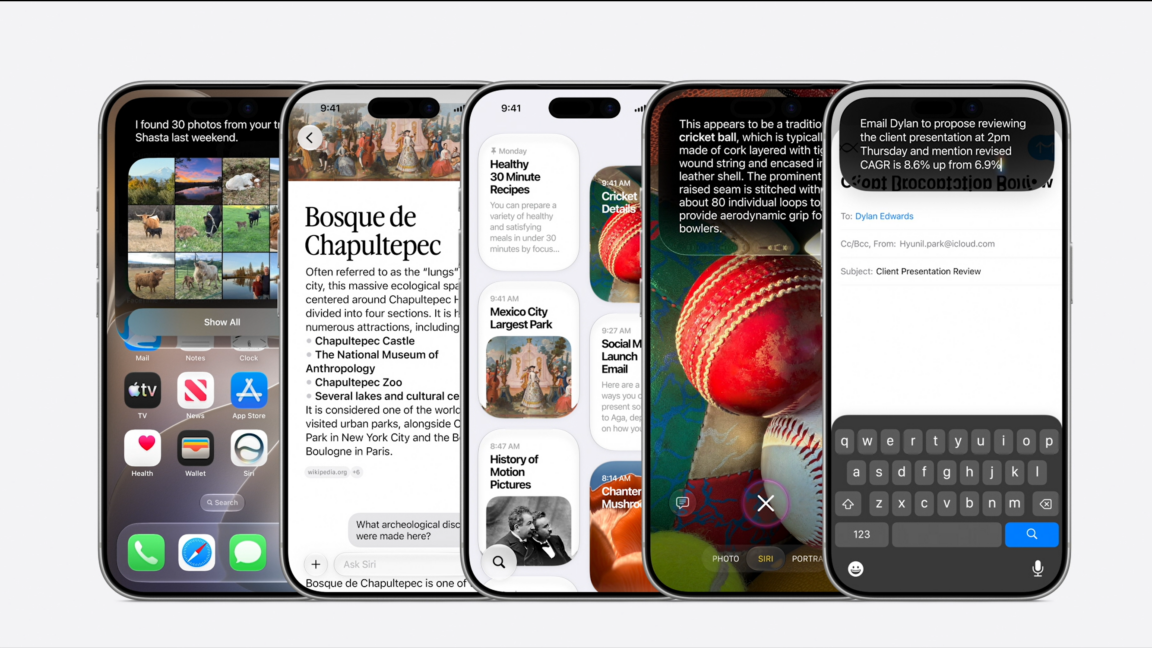
Today at its pre-filmed Worldwide Developers Conference keynote, Apple was finally prepared to fully introduce the long-delayed “Apple Intelligence” update for its Siri voice assistant. The new “Siri AI”—now being promised for OS updates rolling out “this fall”—will come alongside a new Google-powered update to Apple’s on-device Foundation Models, as well as tighter integration of all these AI capabilities across Apple’s many operating systems.
Unlike other companies that “appear to be racing forward, seemingly pursuing AI for the sake of AI, with little regard for the people… it’s meant to serve,” Apple’s SVP of Software Engineering Craig Federighi said, “we believe that truly helpful AI must be centered around you and your needs.”
Just a friendly chat with your AI assistant
The company highlighted this kind of focus in a series of scripted conversational demos with Siri AI, complete with seemingly unedited, multi-second pauses between each spoken prompt and Siri’s response. In these demos, Apple executives showed Siri AI bouncing between different usage modes and app-based tasks as needed in an effort to highlight how Apple Intelligence can now be used “well beyond one-shot tasks” for a “brand new conversational experience” with the virtual assistant.
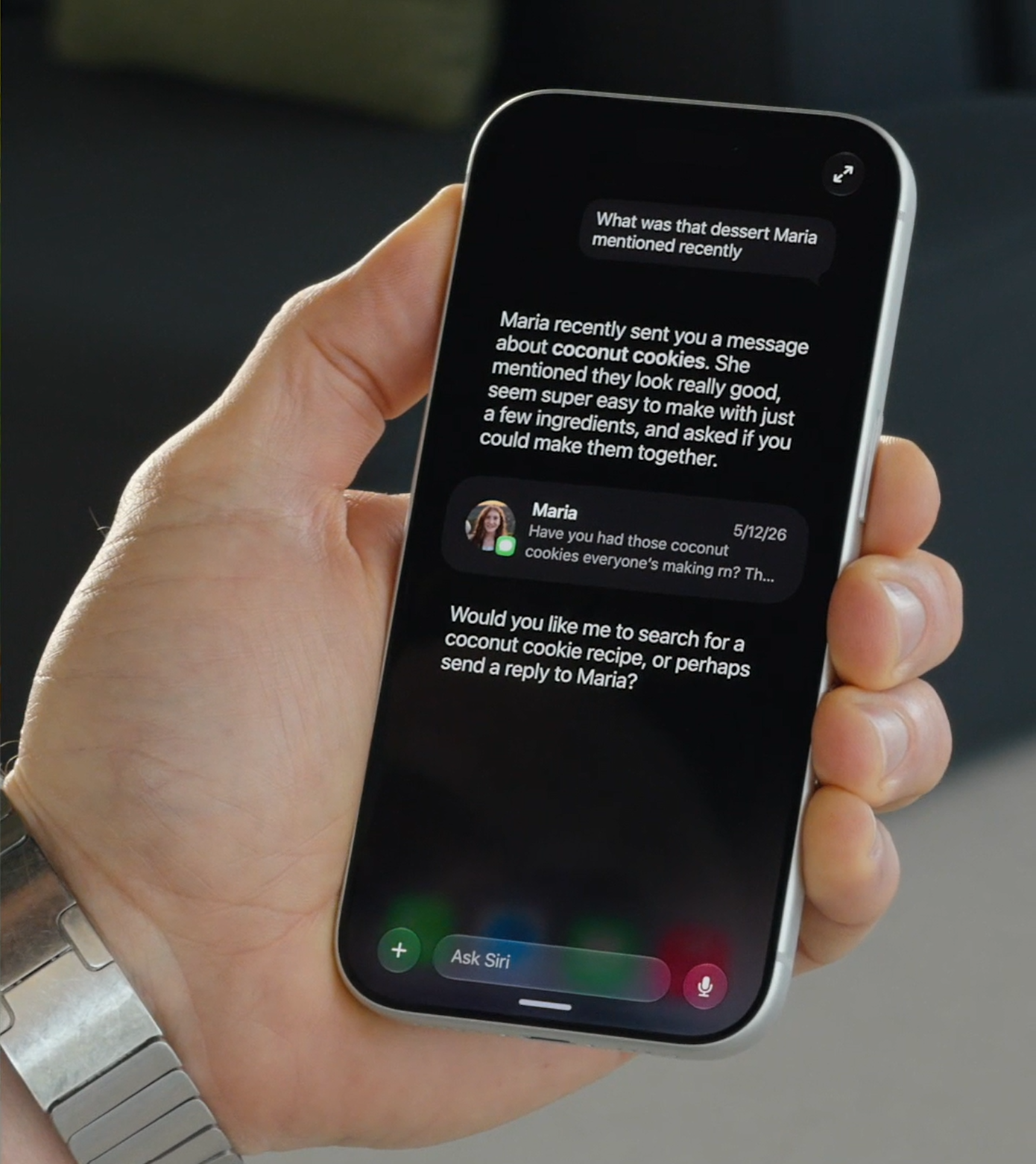
In one example, for instance, a user asked about schedule information for the World Cup, followed by a request for recipes inspired by a Brazil vs Morocco match, then asked for a dessert he remembered had been mentioned recently by his friend Maria (which Siri found in his Messages app). He then asked Siri to integrate this all into a watch party menu and to send that menu to his group chat alongside an invite.
In another demo, the Siri conversation started with a question about where a photo of an arch was taken, then moved to finding the address of a friend named Jeff who had recently moved. With those answers in hand, Siri was able to “give me directions to the arch with a stop at Jeff’s” directly via Apple Maps, without having to juggle the information manually.
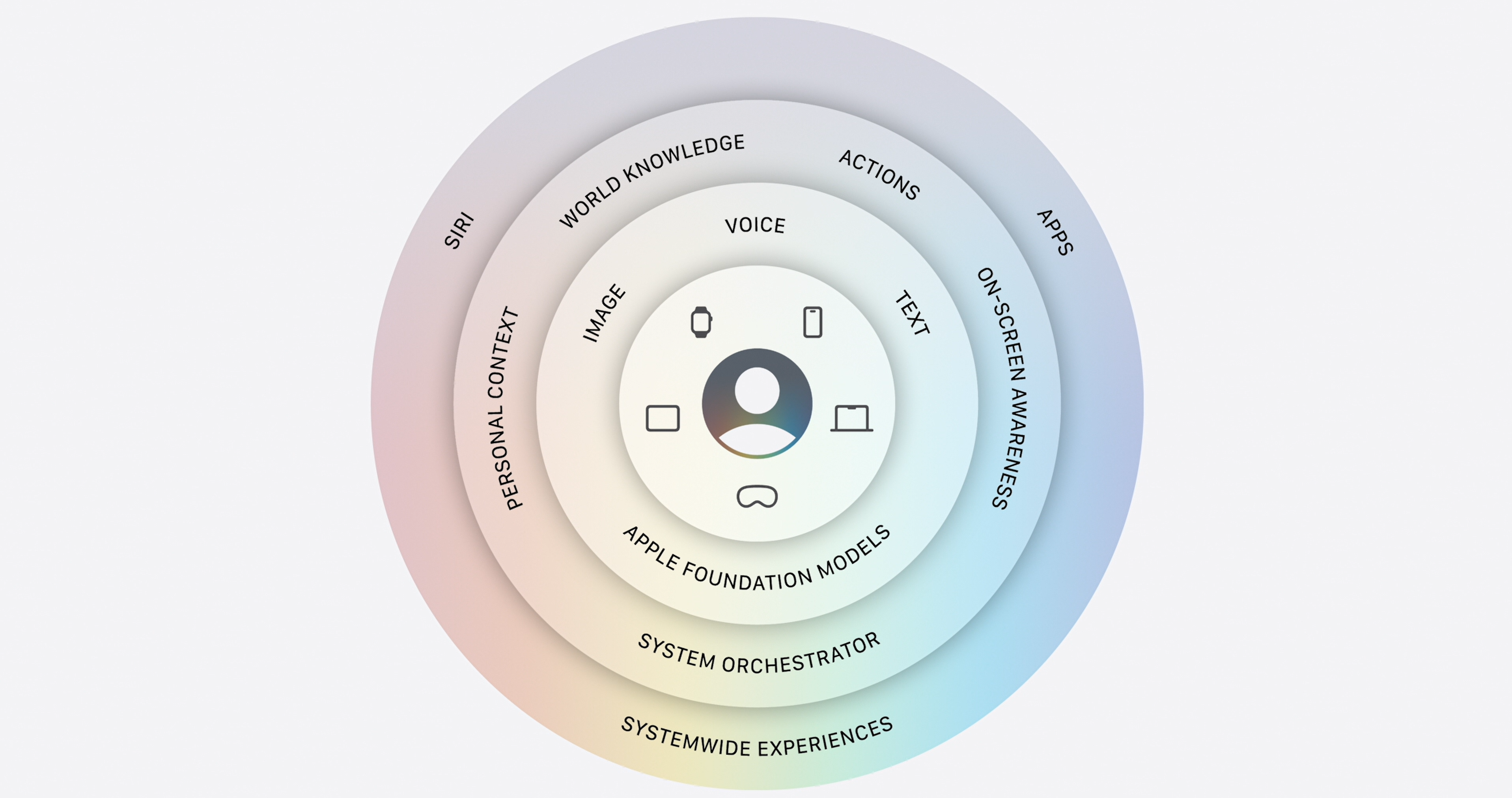
While many other AI models can perform similar tasks, these and other demos highlighted how Apple Intelligence and Siri AI benefit from tight integration into the “personal context” of data on your device. That means Siri can search to find information across your messages and email, even if you can’t remember specifically where that information is stored, for instance. It also means that, when using Siri to write emails, this “personal context” can also customize the writing style to match your previous emails to the same person, Apple said.
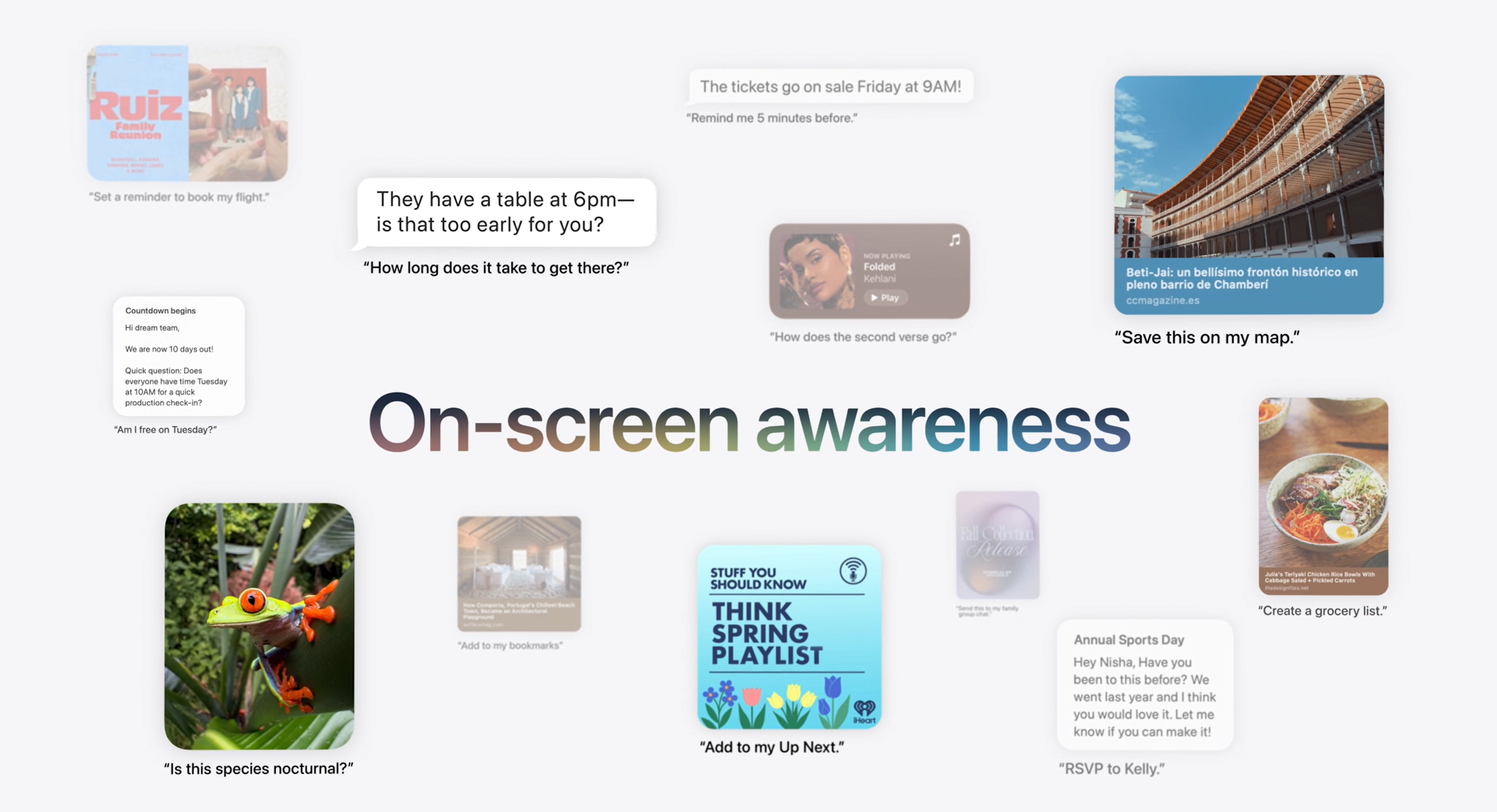
Siri AI utilizes “world knowledge” by searching the web using private cloud compute to generate answers, Apple said, and integrates with app actions to figure out which tools to use to complete a task. The on-device assistant can also display on-screen understanding to tailor its assistance based on what you’re doing at that moment.
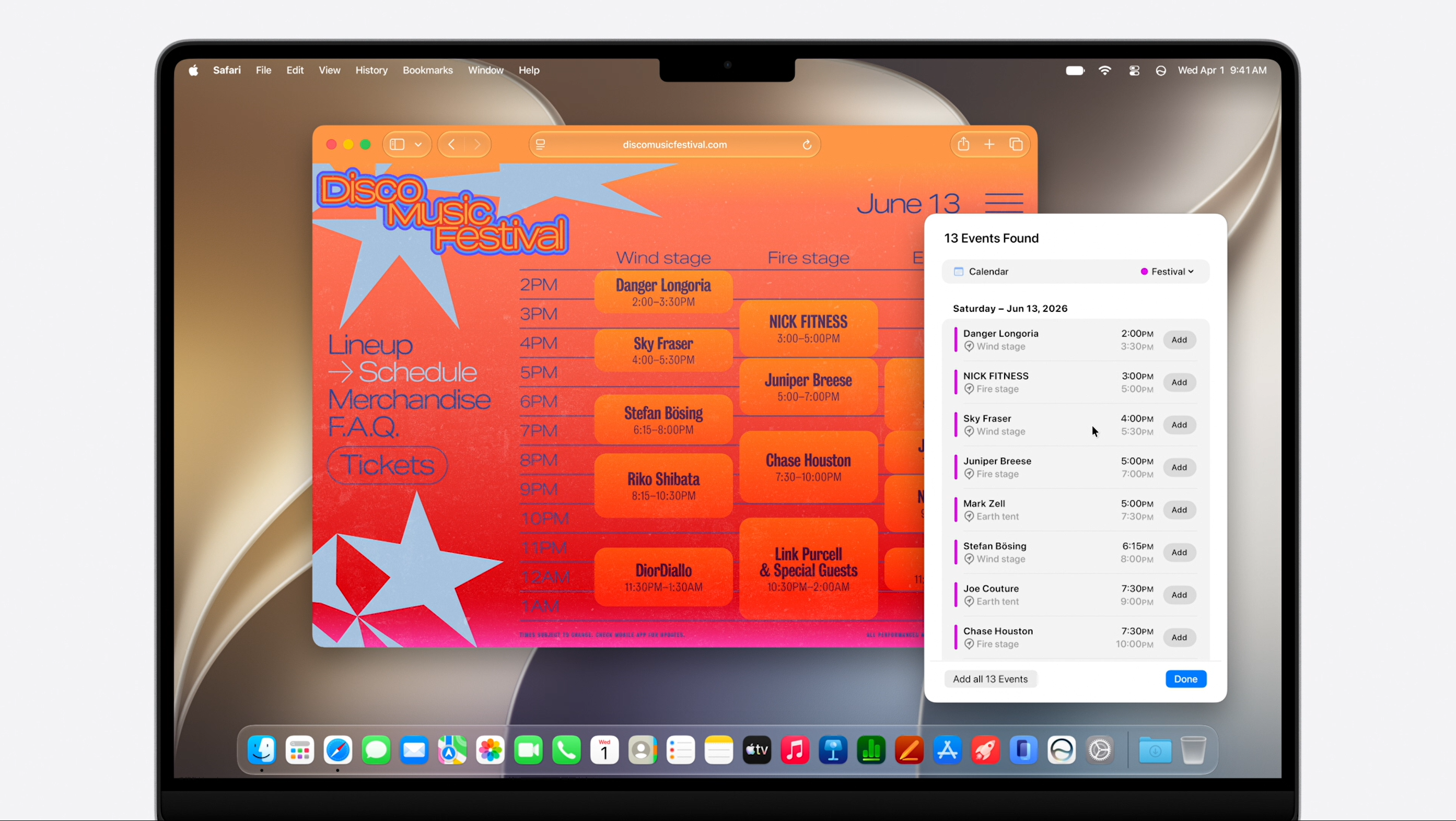
Apple also highlighted Siri’s new “visual intelligence,” which can give relevant responses to questions right from the camera app or extract multiple calendar updates from a complex image of a concert schedule, for instance. On VisionOS, you can also directly ask questions about physical objects you can see in the world around you and get answers from Apple Intelligence. A new “Write with Siri” feature, meanwhile, will let you use Apple Intelligence to generate text “virtually anywhere you type,” Apple said, while a new AI-powered automatic proofreading system will check your writing style system-wide (a la spell check).
On MacOS, these new Siri AI features will be integrated into Spotlight search, which can identify when a typed query should start a Siri conversation rather than just a list of files or web results. You can also ctrl-click across the OS to ask Siri questions about photos, files, or text, or even multiple files at once. And anyone still using VisionOS will be able to put a glowing, animated Siri Orb into their workspace that will be able to answer questions whenever you look at it.
Conversations with Siri AI will be stored locally and via iCloud in a new dedicated Siri app, letting you start a conversation on one Apple device and finish it on another.
Two levels of AI
Earlier this year, Apple announced it had signed a multi-year deal with Google to use its Gemini model as the basis for that Siri update. Last month, though, we heard reports that Apple was having trouble cramming all of Gemini’s features into completely local on-device models.
At WWDC, Apple announced a new two-tier structure to its on-device Apple Intelligence offerings. The company’s “most capable model” will now only be available on devices that meet certain chip and memory requirements. Those are:
- iPhone Air and iPhone 17 Pro
- iPads with M4 and later CPUs and 12GB or more of memory
- Macs with M3 and later chips and 12GB or more of memory
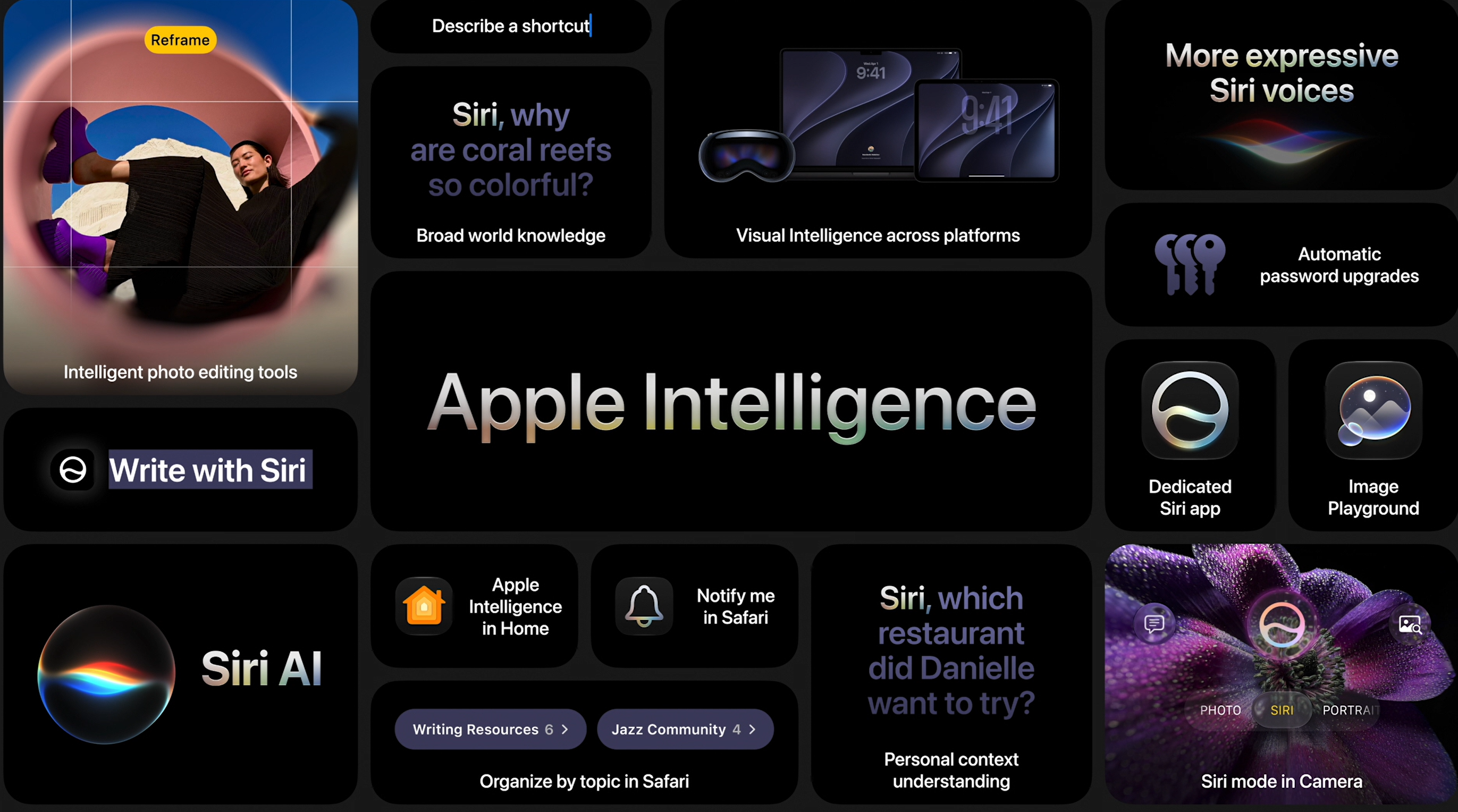
Less capable devices that currently support Apple Intelligence will get a less capable model that is missing some features, including a new, more expressive voice for Siri’s responses (that “expressiveness” can be customized with a slider alongside the “pace” of its speaking voice). The most powerful model also comes with what Apple says is a major boost in dictation accuracy, including better spelling and punctuation.
Many Apple Intelligence features will continue to rely on “private cloud compute” servers as well. But Apple Intelligence features like image generation will also be subject to daily usage limits because of their reliance on off-device servers, Apple said. Subscribers to most iCloud+ plans will get expanded usage of these features.
The new Siri AI features will only be available in English to start, but will eventually be made available for every language in which iOS operates.
Apple once again stressed that these new Apple Intelligence features were built with “non-negotiable” privacy protections to make sure your Siri AI conversations aren’t available to Apple or anyone else.

Discussion (0)
Sign in to join the discussion. Free account, 30 seconds — email code or GitHub.
Sign in →No comments yet. Sign in and be the first to say something.