As Grok flounders, SpaceX bets future on beating Big Tech at AI
Mirrored from Ars Technica — AI for archival readability. Support the source by reading on the original site.
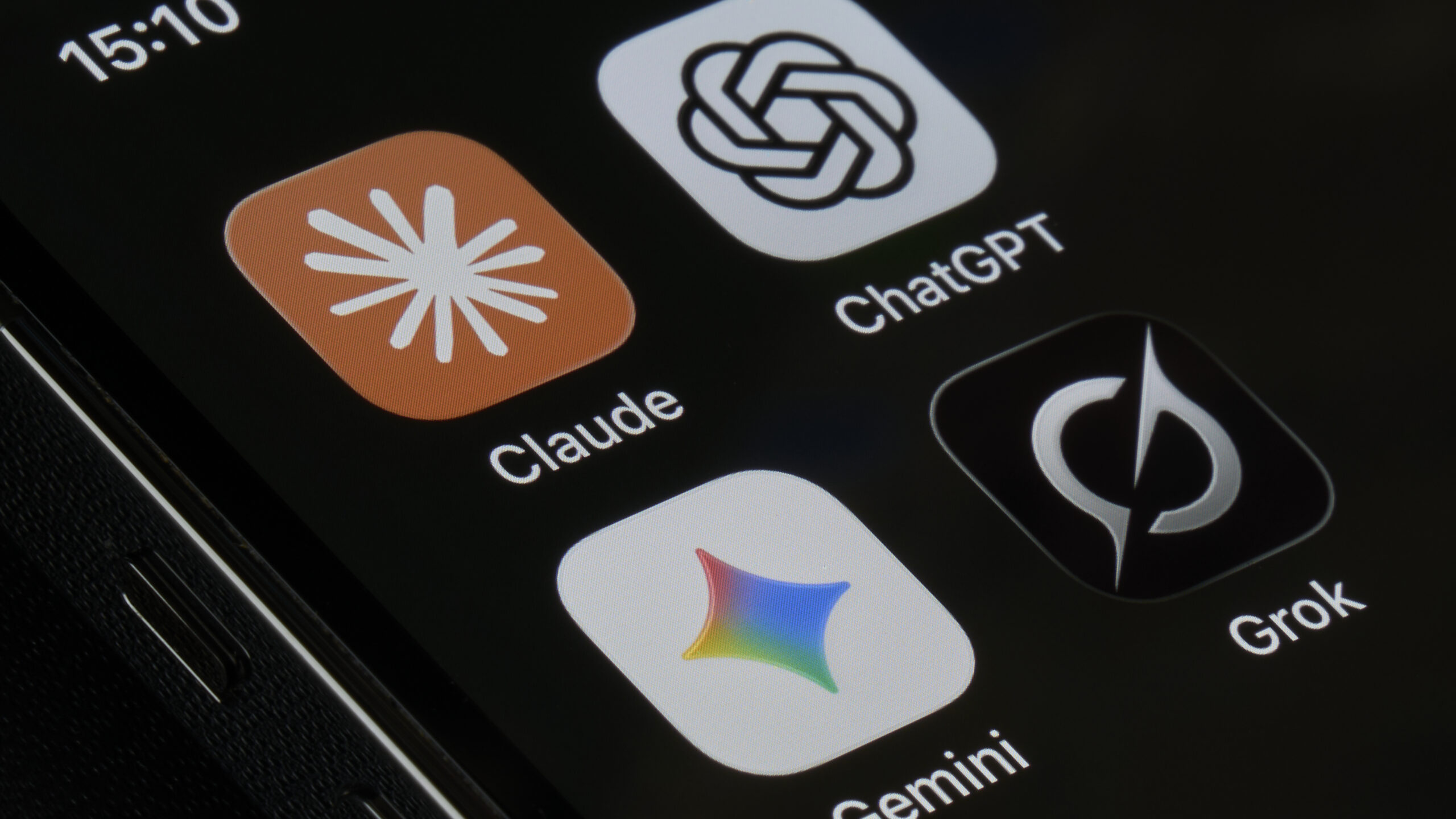
Elon Musk’s SpaceX has highlighted AI as the tentpole of the company’s future, projecting a multi-trillion-dollar market opportunity that rivals the total value of all US economic activity. But the company must first win over customers who generally favor AI models from competitors such as OpenAI and Anthropic.
SpaceX described its traditional space launch and satellite business as playing a supporting role to its fledgling AI business in financial disclosures that preceded an expected initial public offering of company stock. That stems from SpaceX having formally acquired Musk’s company xAI earlier this year—the SpaceXAI division now oversees the Grok AI models and the associated Grok chatbot previously developed by xAI.
The SpaceX S-1 filing claimed that the company has “the largest actionable total addressable market in human history” and highlighted AI as representing most of that opportunity at an estimated $26.5 trillion market—a number that comes close to rivaling US nominal GDP that stood at nearly $32 trillion in the first quarter of 2026.
It is unclear what timeframe SpaceX is using for its addressable market estimate, but that is significantly larger than third-party estimates for the global AI market. For comparison, Gartner estimated that worldwide spending on AI will reach $3.3 trillion by 2027. Similarly, Citigroup has suggested that the global AI market may surpass $4.2 trillion by 2030.
To fulfill its ambitions, SpaceX must first fight to catch up in the ongoing AI race against well-financed competitors backed by Big Tech. Musk himself described xAI prior to its SpaceX merger as “the smallest of the AI companies” during court hearings for his lawsuit against OpenAI, according to The Wall Street Journal.
Looking for a comeback
The Grok AI chatbot developed by xAI has lagged behind other AI services in terms of usage, despite being heavily integrated with Musk’s social media site X. An AppMagic survey of 260,000 US consumers and workers who use AI found that just 0.174 percent paid to use Grok in the second quarter of 2026, The Wall Street Journal reported. The same survey showed more than 6 percent of respondents paying for OpenAI’s ChatGPT.
Corporate use of Anthropic’s Claude and the Google Gemini AI models has also soared in the past year, according to the market research firm Enterprise Technology Research. The firm’s survey of 500 people—also highlighted by The Wall Street Journal—showed reported Claude usage among respondents’ companies jumping from 21 percent to 48 percent between 2025 and 2026. Similarly, reported Gemini usage rose from 27 percent to 40 percent in the same time period.
Grok’s corporate usage also saw a smaller bump, rising from 4 percent to 7 percent. “We have launched Grok Business, Grok Enterprise, Grok API, and xAI Gov, products that we believe will be attractive to enterprises and governments, and we expect substantial opportunities to acquire new customers,” SpaceX wrote in its S-1 filing.
However, Reuters reported that “xAI’s Grok chatbot has been a flop with one of the world’s largest customers—the US government.” The Reuters examination of AI inventory records from federal agencies in 2025 showed just three public mentions of using either xAI or Grok out of more than 400 publicly disclosed examples of AI use by the government.
The peak of Grok’s download popularity coincided with a January 2026 update that allowed Grok users to generate millions of sexualized images of women and children by using real photos to virtually undress people—a situation that persisted for weeks before developers addressed the situation. The AI nudifying scandal led to lawsuits against xAI and spurred the European Union to ban nudifying apps.
Grok also still incorporates features such as “Spicy” and “Unhinged” modes. The SpaceX financial disclosure described those features as presenting “heightened risks, including reputational harm, the generation of potentially explicit content and misinformation or deceptive outputs, potential nonconsensual or exploitative imagery, intellectual property infringement, or content that could be viewed as exploitative, harmful, harassing, abusive, or discriminatory.”
From a business standpoint, SpaceX acknowledged that this leaves the company open to “the risk of regulatory scrutiny, enforcement actions, litigation, or claims of harm, as well as reputational damage, user or advertiser backlash, or limitations on our ability to distribute or monetize our products in certain jurisdictions or through certain partners.”
Building out the future
SpaceX’s bet on its future AI business goes beyond Grok. The company’s financial filing disclosed work with Musk’s company Tesla on the development of “Macrohard,” which it describes as “an agentic AI platform designed to be capable of fully emulating digital workflows and augmenting human operation of computers using sophisticated autonomous agents.”
The filing also mentioned the Terafab initiative—an even more ambitious venture involving SpaceX, Tesla, and Intel—that aims to build a chip manufacturing facility capable of “producing 1 terawatt per year of compute hardware.” But SpaceX cautioned that both the agentic AI and chip fab projects are “in the very early stages” of development.
For now, SpaceX claims to already “own and operate what we believe to be the largest AI training data center clusters on Earth” with its Colossus and Colossus II data center campuses located in Memphis, Tennessee. However, SpaceX recently struck a deal with rival AI company Anthropic that gives the latter complete use of the entire compute capacity for the Colossus data center.
The reason for this decision may be how the rapid buildout of Colossus incorporated a mix of different Nvidia GPU chips that was very inefficient for AI training workloads, according to reporting by Tom’s Hardware. So it potentially made more sense for SpaceX to rent out one of its “AI training data center clusters” to Anthropic so that the latter could run more AI inference tasks for Claude users.
But SpaceX’s biggest bet is on unshackling AI compute from terrestrial limitations and using its launch capabilities to eventually deploy up to 1 million satellites designed to act as orbital data centers—something that the company claims it is uniquely positioned to do. Ars has previously examined the logic behind orbital data centers along with the economic challenges of taking this course of action.
Building that orbital data center future envisioned by SpaceX would potentially require more than a trillion dollars. The latest financial disclosures show the company is currently unprofitable—the Starlink Internet satellite service being the only profitable unit— with a growing debt load that has reached $29 billion. SpaceX reported a net loss of $4.3 billion in the first quarter of 2026, while spending more than $10 billion on primarily AI infrastructure along with rocket and satellite hardware, according to the investment research firm Morningstar.
Given that spending spree and Grok’s lagging position in the AI race, the expected SpaceX IPO would provide a critical cash infusion to the company. It remains to be seen whether enough investors embrace SpaceX’s vision for the future to see it through.

Discussion (0)
Sign in to join the discussion. Free account, 30 seconds — email code or GitHub.
Sign in →No comments yet. Sign in and be the first to say something.